Precision springs
Custom CNC Wire Forms
Beyond Helical Limits | Complex 3D Bending | Rapid Prototyping | High-Strength One-Piece Forming
Request a QuoteSend your drawing, required quantity and application details. Our Dongguan team will review the part directly.
Product Description
I. Overview
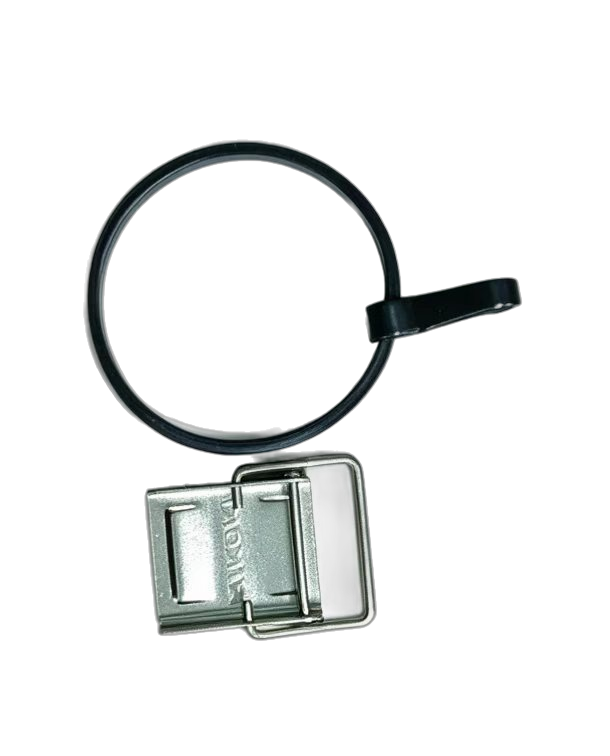
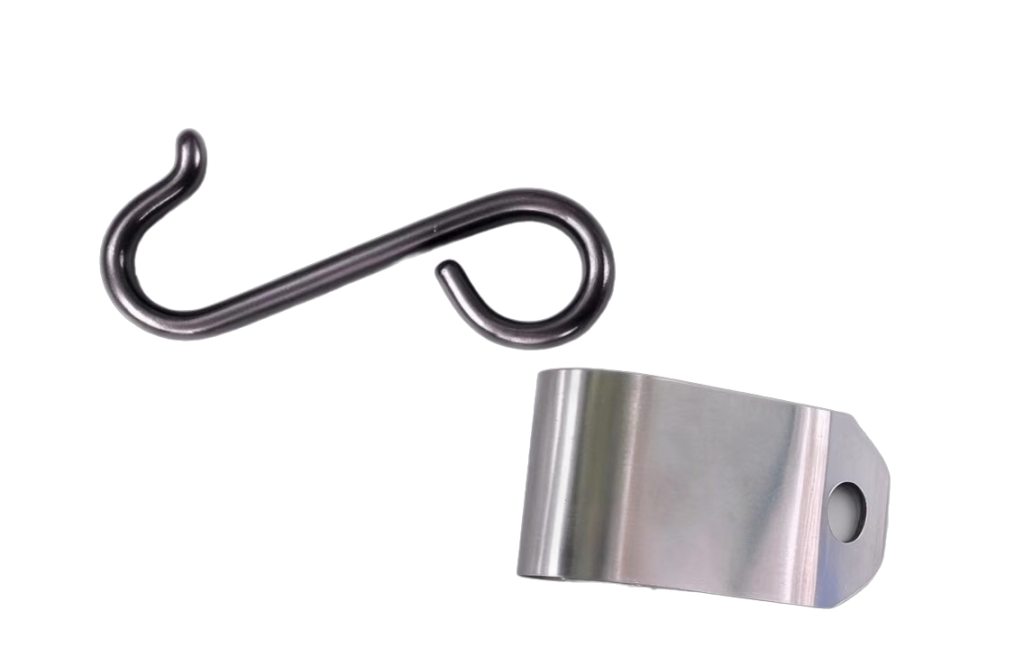
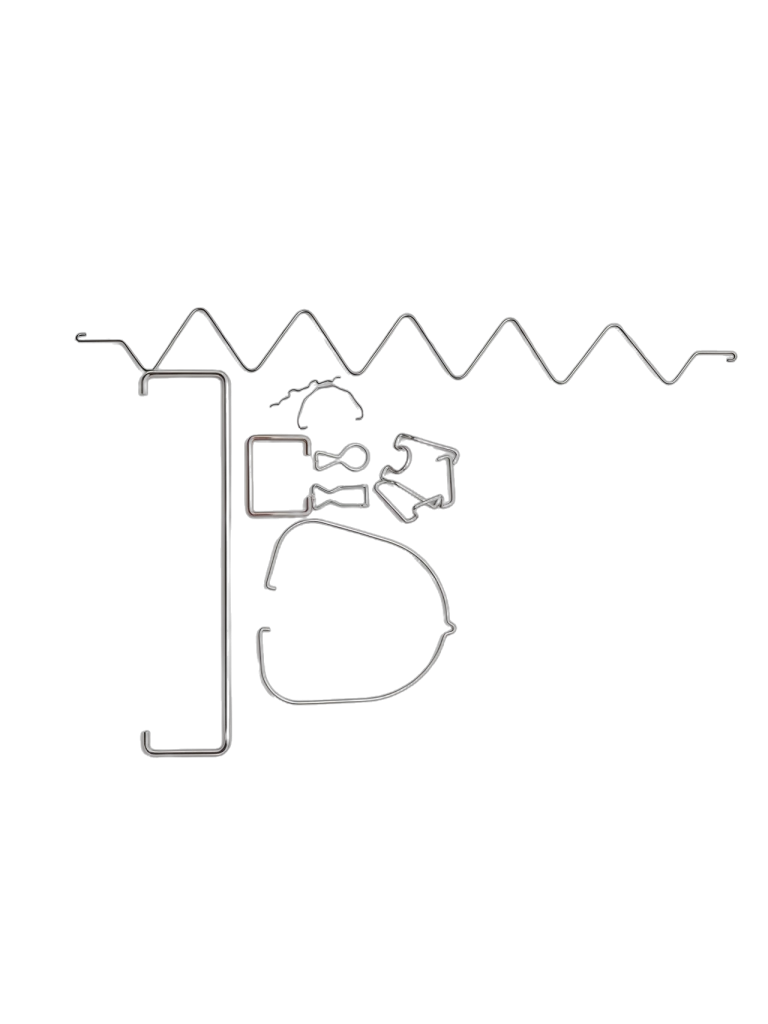
CNC wire forming refers to the use of CNC spring machines to process metal wire through precise wire feeding, bending, coiling, stamping, and other processes into various non-helical 2D or 3D special-shaped metal parts. "Breaking through the shape limitations of conventional springs, a single piece of wire can achieve complex assembly, snap-fit, and elastic support functions." We have multi-axis CNC camless computer spring machines capable of customizing various high-difficulty wire bending parts and special-shaped components with extremely high precision and consistency, greatly reducing our customers' assembly costs.
II. CNC Process Advantages
Multi-Axis Camless Forming: Servo motors independently control the bending tools, eliminating the need for traditional cams. Machine setup is fast, and processing precision is extremely high, especially suitable for complex 3D bending.
One-Piece Forming Design: Single-shot forming reduces weld points and seams, greatly improving the overall strength and fatigue life of the product and avoiding failure caused by broken weld points.
High-Precision Cutting: Ensures flatness of wire ends and length consistency, with no secondary chamfering required.
Broad Material Compatibility: Supports carbon steel wire, piano wire, stainless steel (SUS304/316/631), phosphor bronze, beryllium copper, nickel-plated wire, galvanized wire, etc. Wire diameter processing range covers 0.2mm–8.0mm.
III. Applications
Wire-formed parts are the "skeleton" and "joints" of industrial products, widely used in:
Home Appliances and Consumer Electronics: Washing machine filter screen snap springs, refrigerator door hinge supports, oven knob positioning clips, special-shaped conductive contact parts inside micro e-cigarettes.
Automotive and Transportation: Automotive seat frame extension springs, seatbelt guide rings, various metal pipe/tube bending brackets in engine compartments, exhaust pipe hangers.
Medical Devices: Surgical instrument jaw springs, stainless steel nose bridge strips for respiratory masks, metal guide wires for endoscopes.
Hardware and Construction: Internal transmission pull rods for door locks, shelf hooks, limit pins and clips for heavy machinery.
IV. Environmental Resistance
Outdoor and High-Humidity Environments: SUS304/316 materials are recommended, or hot-dip galvanizing or Dacromet treatment applied to carbon steel parts, to ensure no rust under rain or marine climates.
High-Frequency Assembly/Disassembly and Load-Bearing: For wire-formed clips that require repeated insertion and removal, we optimize the arc transition at the bend (R-angle) and select piano wire or SUS631, combined with stress-relief tempering, to prevent fracture during use.
Conductive and Non-Magnetic Environments: In electronic components, nickel-plated wire or phosphor bronze is used to ensure good conductivity and elasticity while avoiding magnetic field interference.
V. Quality Assurance
Precise Unfolded Length Calculation: Engineers precisely calculate the unfolded length of the wire and the bending allowance (springback compensation) based on 3D drawings, ensuring the finished dimensions perfectly match the drawings.
Stress-Relief Tempering (Eliminating Internal Damage): Wire-formed parts generate enormous internal stress at bend points. We perform dedicated low-temperature stress-relief baking on finished products to prevent "shape memory springback" or fracture during subsequent use.
Full-Dimension First Article Inspection (FAI): Using profile projectors and high-precision calipers, we issue full-dimension reports (including angles, bend heights, spans, etc.) for the first article, ensuring parameters are fully locked before mass production.
VI. Specifications
| Customization Parameter | Range / Description |
|---|---|
| Applicable Wire Diameter | 0.2mm ~ 8.0mm (varies by material) |
| Bending Dimensions | 2D planar bending / 3D spatial bending |
| Material Options | Carbon steel, piano wire, 65Mn, SUS304/316/631, phosphor bronze, brass |
| Surface Treatment | Environmentally friendly zinc plating, nickel plating, black oxide, electrophoretic coating, Dacromet, gold/silver plating (contact parts) |
| Tolerance Precision | Dimensional tolerance up to ±0.1mm, angle tolerance ±1° |
| End Processing | Flat cutting, chamfering, necking, flattening, punching, etc. |
VII. Why Choose Us?
Reduce Your Overall Costs: Through precision CNC one-piece forming technology, we simplify complex structures that originally required welding and riveting of multiple parts into "one piece of wire formed in a single pass," saving you labor assembly costs, tooling costs, and post-maintenance costs.
Free Design for Manufacturability (DFM) Review: Simply upload your 2D/3D drawings (PDF, STEP, DWG), and our engineering team will conduct a DFM analysis to evaluate which complex bends can be optimized to improve strength and reduce production costs.
Rapid Prototyping Capability: With highly flexible CNC equipment, even without tooling, we can complete non-standard wire-formed samples within as fast as 24–48 hours, helping your R&D projects land quickly.
Suitable for Both Small and Large Batches: From dozens of pieces for scientific research validation and hundreds of pieces for precision instruments to million-level automotive and home appliance orders, we ensure excellent batch-to-batch consistency.
Questions about this part
Sizing, material and inspection for this spring. Anything else, open the quote form and a tooling engineer replies.
Ask about this partWhat should I do if the bending angle of wire-formed parts is inaccurate and tends to spring back?
Metal bending inevitably involves springback. We have high-precision CNC spring machines and combine them with our engineers' extensive machine adjustment experience, using "over-bending compensation" in programming to offset springback. In addition, for parts with high-precision angle requirements, we add a dedicated setting tempering process.
Do complex wire-formed parts require tooling?
Usually not. CNC camless computer spring machines control tool paths through computer programming and do not require expensive heavy-duty dies like stamping parts. Only a very few special and extremely high-volume structures require simple auxiliary tools.
Can you meet the custom tolerances on my drawings?
Please send us your drawings. The linear tolerance for standard wire-formed parts is within ±0.1~±0.2mm. If your drawings require extremely high precision (such as medical devices), we are capable of challenging tighter tolerances and will provide production evaluation feedback in advance.